 AUTHOR BIO


 TERMS OF USE
ABOUT US
TERMS OF USE
ABOUT US
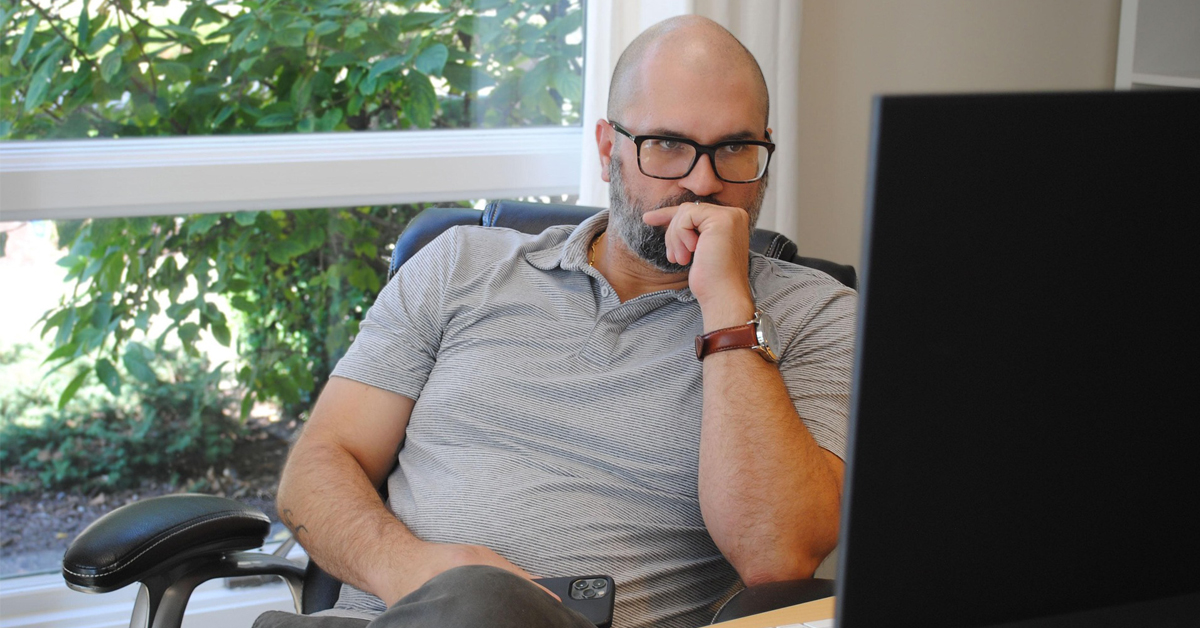
Mike Ballew
Eggstack founder, author, retired engineer, cancer survivor.
PRIVACY POLICY




DISCLAIMER: I am not a doctor, and nothing in this article is medical advice. This is my personal experience, my understanding of what happened to me, and, in some places, my own opinions and theories. I have tried to research the medical information carefully, but I am not a medical professional and I may be wrong. Nothing in this article should be considered established medical fact or used as a basis for making medical decisions. If something here interests or concerns you, please talk to your doctor and do your own research.
March 2026, my first month of retirement. I had envisioned rest and relaxation. Instead, my days were filled with doctor appointments and medical tests. By month’s end, I received a devastating diagnosis.
I honestly couldn’t believe it. I thought there must be some mistake. I had my pathology sent to Johns Hopkins for a second opinion. The result was the same. I had cancer.
At that point, I didn’t know what I didn’t know. I began reading everything I could find on prostate cancer. I learned that approximately 330,000 men in the U.S. are diagnosed with it each year. Annually, about 36,000 die from the disease. It differs from most other medical conditions in that the patient decides the treatment: surgery or radiation. Surgeons recommend surgery, radiation oncologists recommend radiation. I initially thought I would get surgery, but after much research I changed my mind.
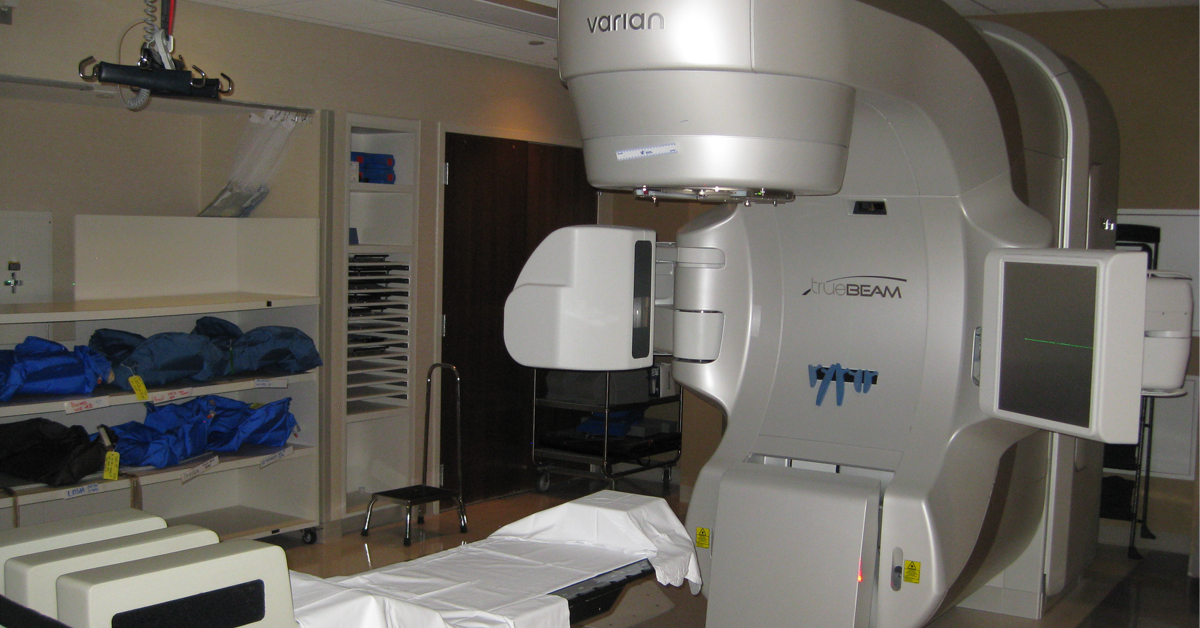
My first day of radiation I had difficulty putting on the hospital gown with all the ties and flaps. A technician led me to a room with a massive door that looked like a bank vault. The sign on the foot-thick door read Caution: High Radiation Area. They helped me onto a table and carefully positioned me. When they closed the door, it was just me and that machine. Multiple heads closed in on me and began rotating around my body. Then I heard a rushing sound that started with a low rumble and rose to a high-pitched shrill.
The heads stopped rotating for a moment and a large flat panel was directly above me. It was using x-ray to align my preprogrammed treatment plan with the fiducial markers surgically implanted in my prostate. I felt the table move slightly. I had read that the precision with this technology is sub-millimeter. When the heads began rotating again, they moved much more slowly, like a lion stalking its prey. A bright sign on the wall illuminated: BEAM ON. I closed my eyes and listened to the music.
It all started earlier this year. A routine physical in January uncovered an elevated PSA. That led to a urology exam, MRI, and a biopsy. A few days later, the urologist called with the news. I had cancer.
The PSMA PET scan that followed showed the cancer was locally contained. That was a huge relief. The large regional healthcare system where all this testing took place had a dedicated cancer center. They called and set appointments with a surgical oncologist and a radiation oncologist.
My wife accompanied me to the appointments. The surgeon explained how he would remove my prostate using robotic laparoscopic surgery. When we got to the question-and-answer session, he did not instill any confidence that the surgery would preserve male function. He said he would “try to offer that." Based on my research, I knew the odds. About 1 in 3 prostate surgery patients wake up with permanent ED that does not respond to medications like Viagra or Cialis and never will. The prostate is enveloped in tiny delicate nerves that resemble a spider’s web. When they are damaged or surgically removed, this is the result.
After the 3-hour surgery, prostate surgery patients are sent home with a foley catheter that remains in place for 7-10 days. The prostate has been removed and the remaining urethra pulled taught and reattached to the bladder. The result is the loss of one of two sphincters that control bladder function. Almost all prostate surgery patients experience urinary incontinence that resolves in a month or two. However, approximately 1 in 4 experience permanent stress incontinence. Although uncommon, prostate surgery patients can experience serious complications such as urethral stricture, sepsis, blood clots, unrelated nerve damage, and tethered urethra.
Radiation treatment is not without risks. Within 5 years approximately 1 in 3 prostate cancer radiation patients develop permanent ED due to nerve damage that does not respond to medications like Viagra or Cialis and never will. However, urinary incontinence with radiation treatment is rare.
The radiation oncologist had a strong foreign accent which made it difficult to understand him. Based on my research, I had developed a preference for SBRT (Stereotactic Body Radiation Therapy) which can be completed in 5 sessions. He said at 42 mL, my prostate was too large for SBRT. He said I would get 28 sessions of conventional radiation plus 4 months of hormone therapy.
After the appointment, I learned that 42 mL was just slightly above average for my age, and that patients with prostates twice that large are routinely treated with SBRT. The radiation oncologist’s bio said he specialized in oral cancer. The surgeon’s bio said he specialized in nephrectomy (kidney removal). We decided to get a second opinion.
My approach up to this point had been rather passive. I let the system run its course. Not anymore. This was too important. I began taking on a more active role and advocating for myself. I found a clinic in our area with lots of accolades that specializes in prostate cancer radiation treatment. Their website mentioned SBRT as did one of the doctor’s bios. I booked an appointment.
This turned out to be an even bigger disappointment. The meeting went off the rails from the moment the doctor walked into the room. Based on our first experience, we expected a brief synopsis of my condition, a recommended treatment plan, and a question-and-answer session. Instead, he introduced himself, sat down, and was like, “Okay, what’s up? What questions do you have?"
The doctor was dismissive of all our questions, and his arrogant, nonchalant attitude was very off-putting. He had this wandering, undisciplined mind that trailed off into another topic mid-sentence without ever really addressing our concerns. After a back-and-forth that was way more exhausting than it should have been, I finally dragged out of him that my treatment plan would be either 45 sessions of conventional radiation plus 6 months of hormone therapy, or 30 sessions of conventional radiation plus seed radiation plus 6 months of hormone therapy. I asked about SBRT and he said at 64 years of age I was too young. I later learned that prostate cancer patients much younger than myself are routinely treated with SBRT.
Could it be that these doctors lacked the facilities or experience to perform SBRT?
As mentioned, SBRT requires only 5 sessions as opposed to 30-45 sessions that older forms of radiation require. 30-45 sessions is Monday through Friday, every week, for 6 to 9 weeks. That’s like a fulltime job. Coupled with the 100-mile round trip and serious traffic, six to nine weeks of that sounded like misery. Not that convenience was the only consideration. SBRT ranks at the top in terms of low risk of cancer recurrence. Based on my research, it is better than surgery. Many prostate cancer patients are led to believe that surgery is once and done. For far too many men, that is not the case. 1 in 3 prostate surgery patients end up right back in Oncology within 10 years. For patients who get SBRT coupled with hormone therapy, that number is less than 1 in 5.
We are fortunate to have access to a center-of-excellence teaching hospital in our area. It is rated number one in our city and number one in our state: Mayo Clinic. I researched their radiation oncologists and found one with an excellent reputation who specializes in prostate cancer. I booked an appointment.
This doctor knocked it out of the park. He was confident, competent, gracious, and extremely knowledgeable. He patiently answered all our questions, many before we even asked. His preference was SBRT and said he would order a Prostox test to determine whether I was genetically compatible with the treatment. The plan would be 5 sessions of SBRT spread out over 2 weeks, plus 6 months of hormone therapy. On the drive home, my wife and I shared our thoughts about the doctor. She said it was like we were made for each other. When we got home, the paperwork for the genetic test kit was already in my IN box.
The facilities and all the people I interacted with at Mayo were top notch. As I write this, I have completed the SBRT sessions and am halfway through the 6 months of hormone therapy. I have received a total of 40 Gy of radiation, which is about 400,000 times greater than a typical x-ray.

Hormone therapy is commonly used in conjunction with radiation for prostate cancer patients. It temporarily reduces testosterone to near zero levels. Prostate cancer feeds off testosterone, so temporarily reducing it helps kill cancer cells. Patients with less aggressive cancer typically forgo hormone therapy, while those with advanced clinical staging typically get 18-36 months. My condition fell somewhere in the middle, with the standard of care being 4-6 months.
Hormone therapy has many unpleasant side-effects, including hot flashes, fatigue, mood swings, insomnia, muscle loss, muscle weakness, brain fog, weight gain, depression, libido loss, and ED. About one month in, I began experiencing extreme hot flashes. They came in waves about 20 minutes apart and kept me up at night. Medication was prescribed to fight the hot flashes, which worked, but it had its own side-effects. Another medication was prescribed to fight those side-effects. So I was taking a medication to fight the side-effects of another medication I was taking to fight the side-effects of another medication I was taking to fight cancer. Additional medications were prescribed to combat potentially permanent side-effects, insomnia, and depression.
I am not going to lie, the hormone therapy is the hardest part. Without going into detail, I am not myself. Fortunately, I have a loving and supportive wife who is with me every step of the way. Prostate cancer hormone therapy affects all men differently. Some barely notice they’re on it, while others commit suicide. I am not trying to be dramatic. The vast majority of men fall somewhere in between, which is to say they experience significant side-effects.
My pathology and test results were on the borderline between low and intermediate risk. That means I was very close to not needing hormone therapy at all. Given that I was experiencing so many side-effects, I requested a review of my 6-month sentence. The team at Mayo agreed and said that it was perfectly fine to end hormone therapy after 4 months. That was a very welcome development. At this point, I have just one month remaining. I can see light at the end of the tunnel.
From the start, my engineering brain kept searching for answers. Chief among them was how did I get this? What did I do wrong to get cancer? As it turns out, probably nothing. Here are the top 10 risk factors for prostate cancer, listed in descending order of impact. Notice that the top 5 are entirely beyond our control.
Prostate Cancer Risk Factors
Conclusion
The consensus is that prostate cancer is probably not preventable. However, dying from prostate cancer is. Men should have their PSA tested on a regular basis. Anything above 4 ng/mL is high and indicates further testing is needed.
Although I have exercised and maintained a healthy weight most of my life, I have made a few changes aimed at potentially lowering my risk of recurrence. Wheat bread instead of white, romaine lettuce instead of iceberg, ground turkey instead of beef. I eat more salads and fruit, less highly-processed foods and sweets. I avoid ice cream, cakes, cookies, donuts, and similar junk food. For the rest of my life, I will be tested for cancer every 6 months.
As I said, I can see light at the end of the tunnel. I look forward to living the retirement I have always dreamed of. More fun, less doctors.
Photo credit: Mike Ballew Eggstack News will never post an article influenced by an outside company or advertiser. Our mission is to help you overcome uncertainty about retirement planning and inspire confidence in your financial future. This article is for informational purposes only and is not financial advice or any other type of advice. Eggstack makes no representation to the validity, accuracy, completeness, or suitability of purpose of any information presented in this article.


 Eggstack founder, author, retired engineer, cancer survivor.