 AUTHOR BIO


 TERMS OF USE
ABOUT US
TERMS OF USE
ABOUT US
Mike Ballew
Eggstack founder, author, retired engineer, cancer survivor.
PRIVACY POLICY
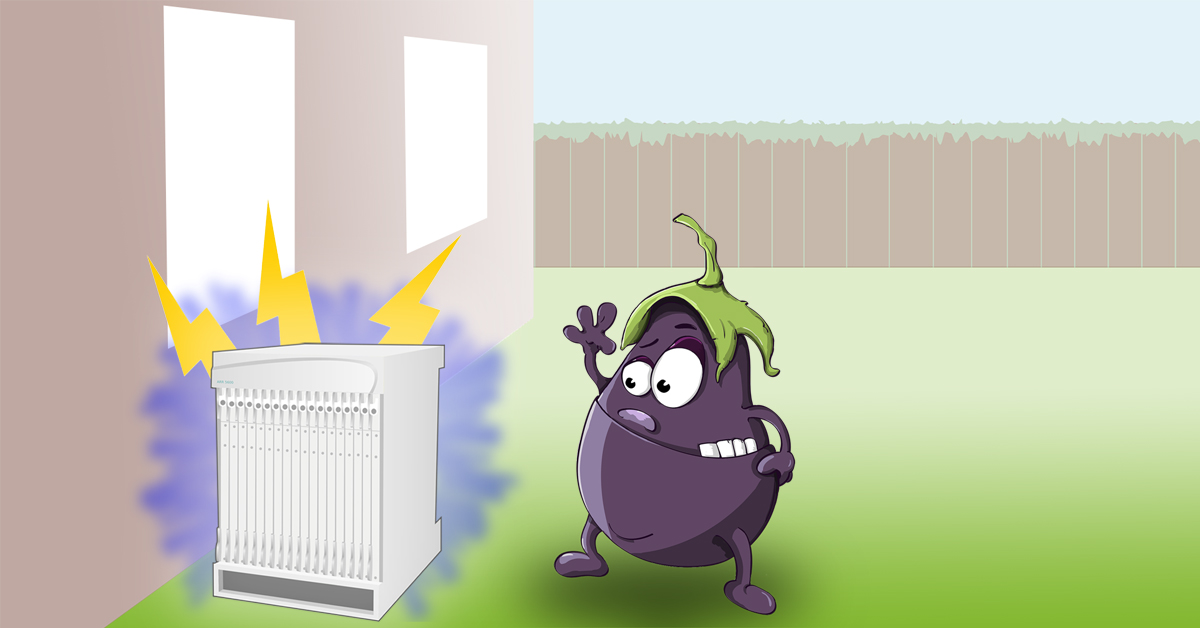




When faced with replacing your home air conditioning system, a little research goes a long way. The residential air conditioner cost/benefit analysis in this article will guide you in determining whether a high efficiency system is cost-justified.
Your home air-conditioning system stops working and a company comes out to have a look. Then you get the bad news: your system is too old to repair; you need to replace it.
Next comes a conversation about what type of system to get: minimum efficiency or high efficiency? Minimum efficiency units cost less, but use more energy. High efficiency units cost more, but use less energy.
As the homeowner responsible for both the new air conditioning system and the utility bills, you need to know if the high efficiency unit saves enough energy to be worth the steeper cost.
The federal government mandates energy efficiency ratings for all residential air conditioning systems. SEER (Seasonal Energy Efficiency Ratio) is a measure of how energy efficient a system is, much like MPG (miles per gallon) is for vehicles.
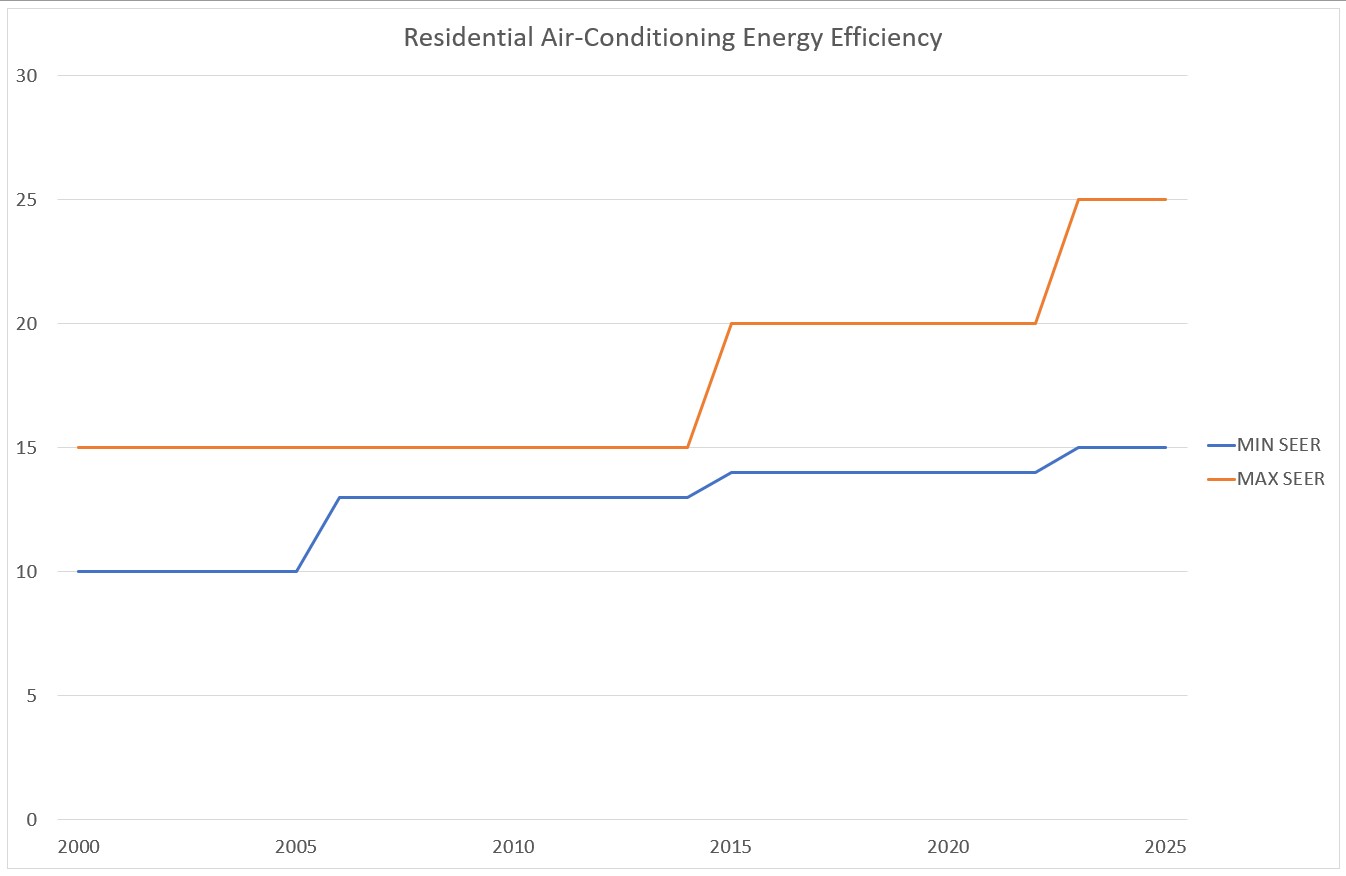
The government mandates the minimum allowable SEER rating. Over the past 25 years, the minimum allowable SEER rating has been steadily increasing. As the minimum increases, so does the maximum. Maximum SEER ratings are not government-mandated, rather they are a function of the marketplace. Manufacturers try to outdo each other in producing the highest efficiency system. The chart below depicts minimum and maximum SEER ratings for the past 25 years.
In 2023, the Department of Energy changed the rating system from SEER to SEER2. In keeping with the objective of this article to provide a concise analysis, we will not get into the weeds on SEER vs. SEER2. Here is a detailed discussion if you are interested.
Listed below are the minimum SEER2 ratings for residential air conditioning systems at the time of this article. You can find the definition of northern and southern U.S. regions Here.
| REGION | 3.5 TONS AND SMALLER | 4 TONS AND LARGER |
|---|---|---|
| North | 14.3 | 14.3 |
| South | 14.3 | 13.8 |
Perhaps you are reading this article because you have an air conditioning system that has failed or is about to fail. Here are some helpful tips to guide your journey.
Now we will walk through the process of a residential high efficiency air-conditioning system cost/benefit analysis. It just so happens that your humble author recently went through this for a property where we hold a financial stake. It’s an 1,180 square foot condominium with a 2-ton HVAC system.
Step 1: Pricing
As outlined above in the Helpful Tips section, get bids from three reputable HVAC contractors. Have each give you the pricing two ways: 1) minimum efficiency unit, and 2) high efficiency unit. Their model lineup is not that simple – most manufacturers have a variety of systems with different efficiencies. Ask for the lowest and highest efficiency units they offer. Get all-in pricing, meaning everything required in terms of equipment and labor.
The average all-in pricing we received for the 2-Ton condominium system is listed below:
Minimum efficiency system: $7,500, SEER2 rating 14.3.
High efficiency system: $15,000, SEER2 rating 20.
Step 2: Analysis
Go to the SEER Energy Savings Calculator website: https://www.seerenergysavings.com/ Note that it’s designed to compare new systems to existing systems, but we are going to use it to compare a new minimum efficiency system to a new high efficiency system.
A dialog box may appear asking for permission to use your location. Allow it, as this is required to include electricity costs and weather characteristics specific to your region.
You will see three sliders: 1) Current SEER Rating, 2) Current Tonnage, 3) New SEER2 Rating (refer to the image below).
Current SEER Rating Slider: Set the Current SEER Rating slider to 15. Again, if you want to learn more about the SEER and SEER2 rating systems, please refer to the previously-mentioned resource. The minimum allowable SEER2 rating for most of the country at the time of this article is 14.3, which equates to a SEER rating of 15.
Current Tonnage Slider: Set the Current Tonnage slider to the size of your unit. It will be stated in the bids you received in Step 1. For our example, the adjustable control is set to 2 Tons.
New SEER2 Rating Slider: Set the New SEER2 Rating slider to the SEER2 rating of the high efficiency system. It will be stated in the bids. Each quotation may have a different high efficiency rating depending on the make and model quoted. Pick one, or average all three. In our example, the slider is set to a SEER2 rating of 20.
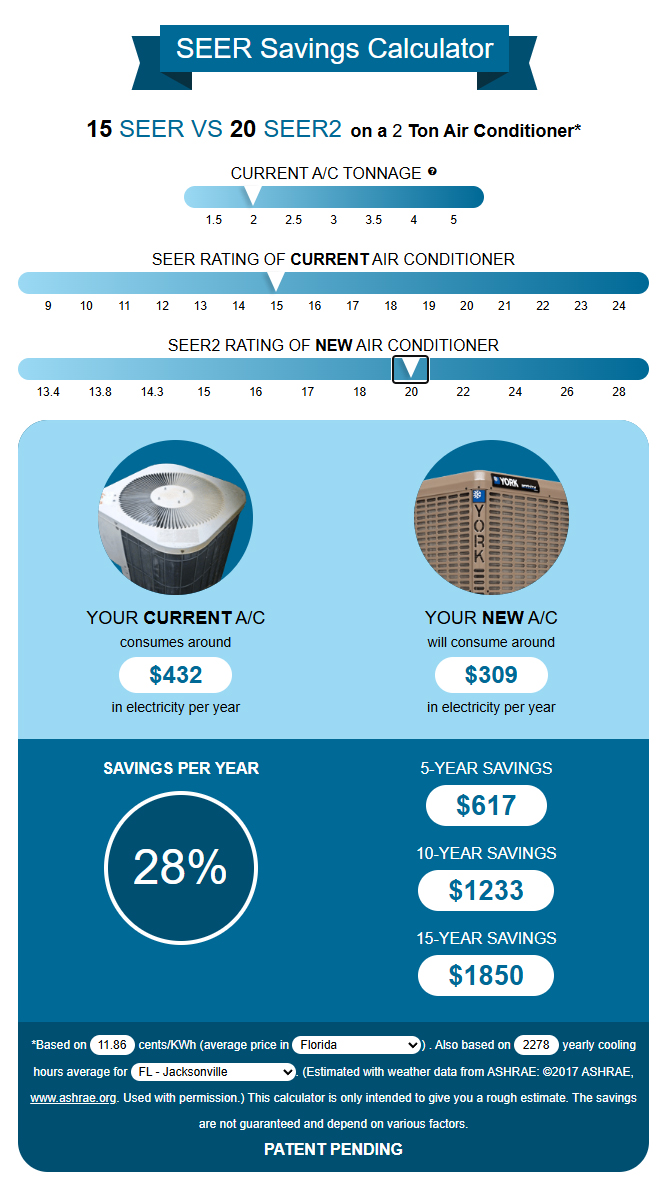
As depicted in the image above, here are the results of the analysis:
5-Year Savings: $617
Dividing by 5 gives us $123 savings per year. Dividing by 12 months gives us $10 savings per month. The high efficiency system costs $7,500 more than the minimum efficiency system, but only saves $10 on the monthly electric bill.
If we take the $7,500 in extra cost for the high efficiency system and divide it by $10 per month, we get a payback of 750 months or 62 years. It would take 62 years for the high efficiency system to pay for itself. Recall that the useful life for a residential HVAC system is only 15-20 years.
No. A high-efficiency air conditioner is not worth the extra cost. You will pay twice as much for a high efficiency system and it will die of old age long before it ever pays for itself. Regardless of what the technician/salesperson may tell you, high efficiency air conditioning systems do not save nearly enough electricity to justify their high price. However, they do earn a hefty profit for HVAC contractor, which translates into big commissions for the technician/salesperson.
Residential high efficiency air conditioners are for rich people and environmentalists. As a homeowner, you need value for your money. Buying a high efficiency air conditioning system with the objective of saving money is an exercise in futility.

SAMPLE FLYER
Your Name
Address
Phone
Thank you for bidding on our home improvement project
Provide a written proposal stating the make and model numbers of the new heating and cooling system indoor and outdoor units, tons of cooling capacity, and lump sum pricing including all equipment, labor, materials, and components required for the complete system.
Scope of Work:
Requirements:
Provide Two Quotes:
Include two quotations in your proposal based on system efficiencies:
DISCLAIMER
The views expressed in this article are the personal opinions of the author. The information presented in this article is intended for informational and entertainment purposes only, and shall not be construed as financial advice, legal advice, tax advice, or any other type of advice. The information presented in this article is general in nature and shall not be considered as suitable for your particular situation or set of circumstances. While every effort is made to present complete and accurate information, no representation, guarantee, or warranty, expressed or implied, is made as to the validity, accuracy, completeness, or suitability of purpose of the information presented in this article. The information in this article may become outdated over time and no representation, guarantee, or warranty, expressed or implied, is made that anything in this article is current or up to date. The author assumes no liability for any result or consequence including, but not limited to, financial results, legal results, or tax consequences based on the use of the information in this article.



 Eggstack founder, author, and retired professional engineer.